
What businesses are really concerned about with MHHS (and what to do next)
Market-wide Half Hourly Settlement (MHHS) migration is already underway.
By 2027, every electricity meter in the UK will move to Half Hourly settlement. The question is no longer what MHHS is. It’s whether you’re ready.
When speaking to our customers, three concerns consistently surface:
- Switching to Half Hourly settlement
- Changes to their energy bill
- Disruption from more frequent manual read site visits
These concerns are valid. But they’re rarely the root cause.
What’s really driving these concerns?
When you look deeper, the same underlying challenges appear across most organisations:


These issues already affect energy performance today.
MHHS simply exposes them and makes them harder to ignore.
Why MHHS changes the risk profile
MHHS readiness for businesses depends on three critical foundations:
- Accurate, complete data
- Reliable metering infrastructure
- Timely access to insight
If these aren’t in place, problems can escalate quickly.
Your bills could become estimated instead of actual. Or your costs could become harder to control.
Issues will also take longer to identify and resolve.
Under MHHS, settlement is based on actual Half Hourly consumption.
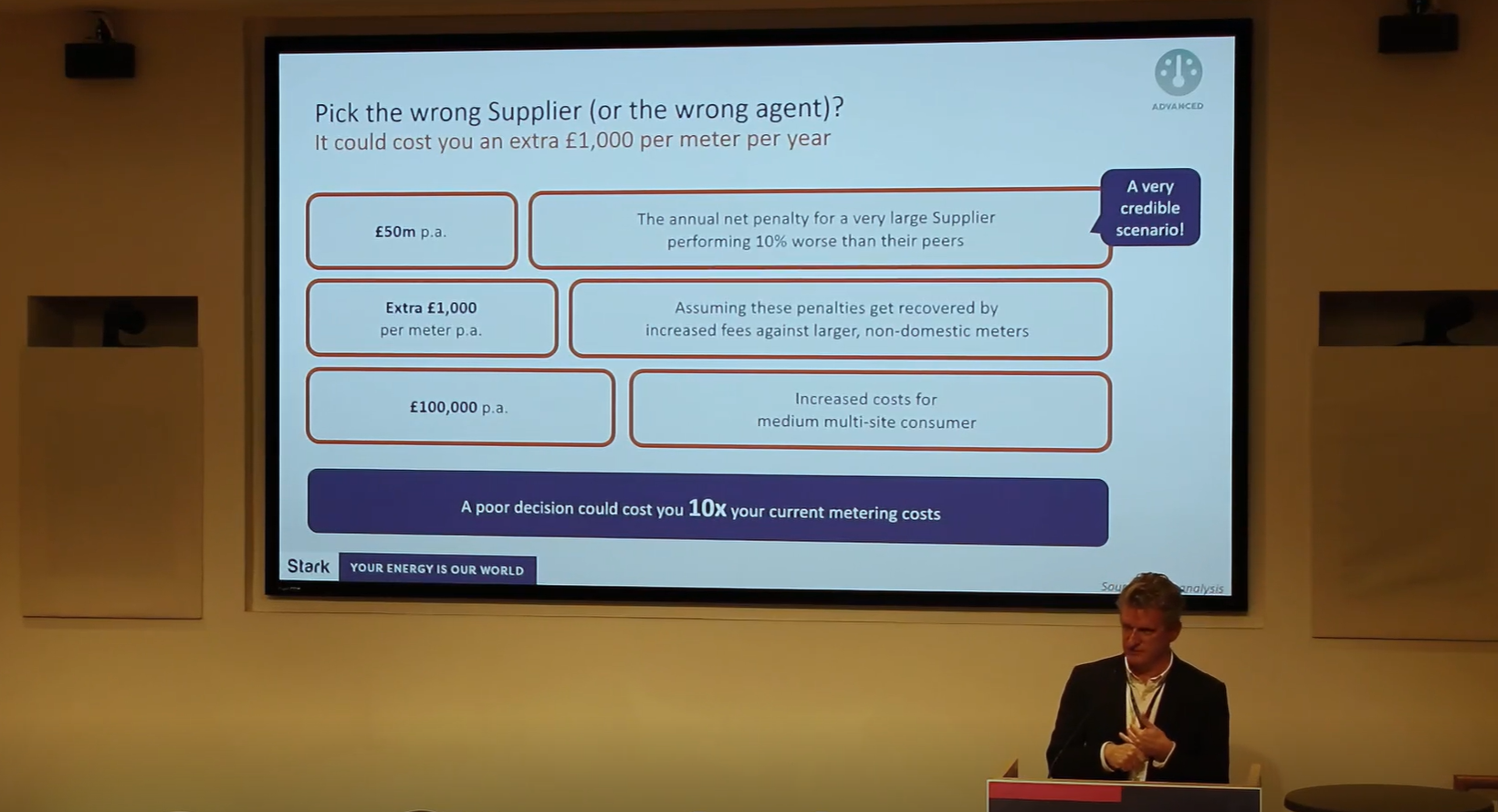
That means gaps in data, delays in collection, or inaccuracies no longer just reduce visibility, they directly impact cost by adding more frequent manual read visits. Businesses will also be exposed to potential pass-through charges from Suppliers facing new penalties.
Where the challenge sits
For many organisations, the issue isn’t a lack of effort.
Data and metering are often managed separately. Responsibility is split across internal teams and third parties. This fragmentation creates delays, reduces accountability, and limits visibility.
As a result, even small issues can take longer to diagnose and fix.
MHHS increases reliance on a connected system. Without it, risk grows.
What organisations should be doing now
Being ready for MHHS doesn’t need to be complex:
- Audit your metering estate to understand the current capability
- Identify which meters can deliver remote Half Hourly data
- Review data quality and consistency across all sites
- Clarify ownership of metering and data performance
- Reduce fragmentation by aligning services and providers
Don’t do it alone. We can help – contact us
Where Stark makes the difference
By combining Data and metering into a single, integrated model, we:
- Resolve issues at source, not just in the data
- Deliver consistent Day+1 Data
- Maintain visibility across all meter types
- Provide one accountable partner across your estate
When Data and metering work together, performance improves across billing, cost control, and operations.
The cost of waiting
MHHS migration is Supplier-led.
If your estate isn’t ready when your wave arrives, you’ll be migrated as-is.
That can mean continued estimated billing, increased operational workload, and delayed access to MHHS benefits.
If your Supplier does not get actual time data, there will be an increase reliance on manual reads and the cost of it will be on your bill.
What happens next?
MHHS migration is already happening.
The organisations that take control of their data and metering will be best placed to control cost, reduce risk, and benefit from a more data-driven energy system.
Take control of your MHHS readiness.
 Don’t miss out
 Don’t miss out
Stay in the loop with our news, events and more direct to your inbox

