
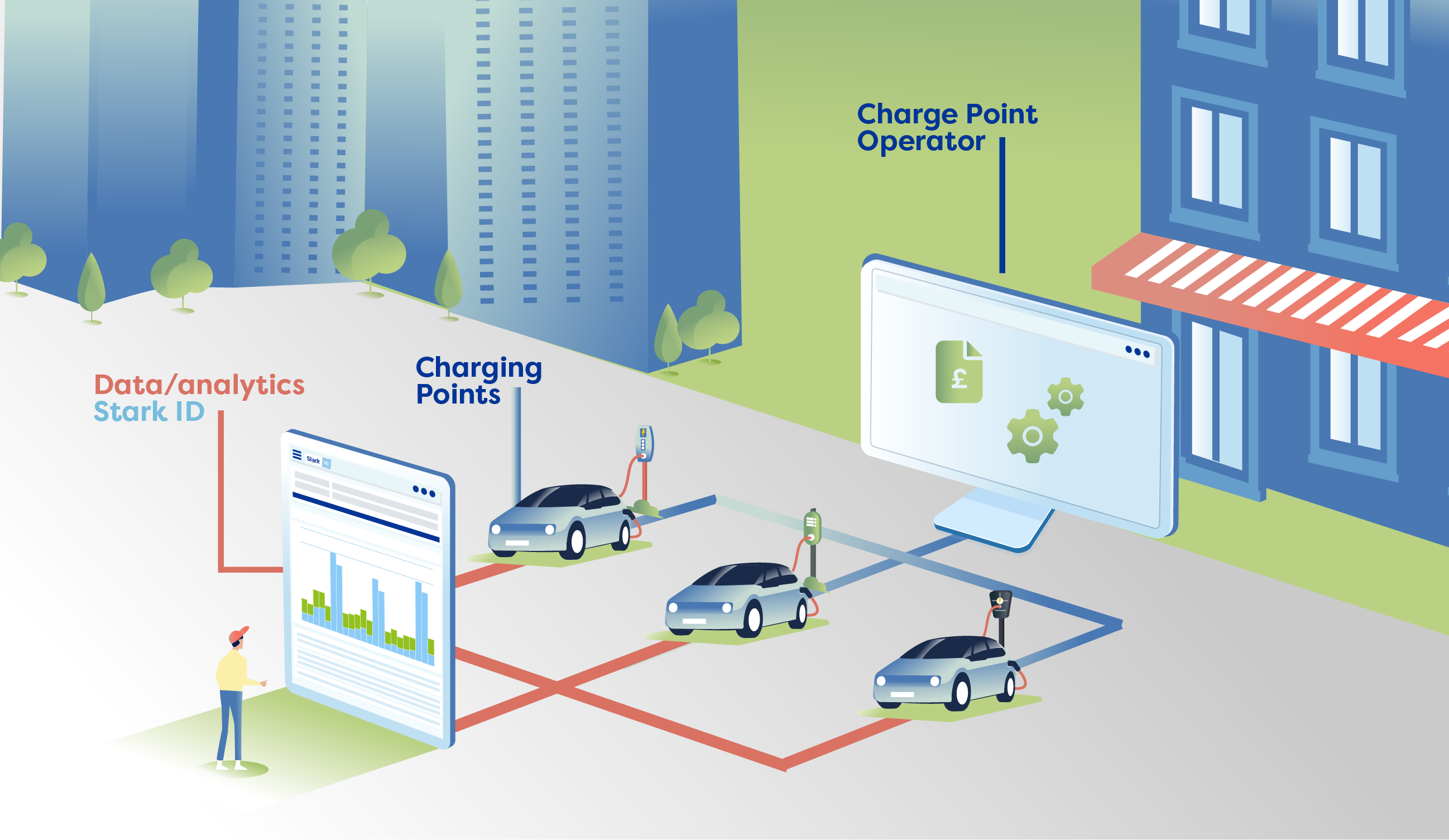
Why separating your building consumption from EV charging is essential for energy managers
If you’re managing a property estate with EV charging infrastructure, you’ve likely encountered a frustrating problem: your energy data has become impossible to read.
That unexpected spike in your Half Hourly consumption? Is it waste that needs addressing, or just someone charging their vehicle?
Without clear visibility, you’re unable to properly manage energy, allocate costs, or prove the ROI on efficiency measures.
This is where data disaggregation comes in.
The EV data challenge
Traditional Half Hourly (HH) data from your meter combines everything into one stream – building consumption and EV charging together.
This creates three critical problems:
- Unclear energy spikes – When you see unusual consumption patterns, you can’t tell if it’s operational waste or legitimate EV charging. This makes it impossible to identify where action is needed.
- Cost allocation chaos – How do you fairly distribute energy costs between building operations and fleet charging? Without separated data, you’re guessing.
- No baseline for improvements – When you implement energy efficiency measures, EV charging masks the results. You can’t prove ROI or measure progress toward sustainability goals.
As one energy manager recently told us: “The concept of a unified system that monitors both building energy usage and EV infrastructure aligns well with my responsibilities and preferences.” But most systems don’t offer this capability.
How data disaggregation works
Our approach is simple but powerful: we separate EV charging consumption from your building’s general energy use within the Stark ID platform, no additional hardware required.
Before
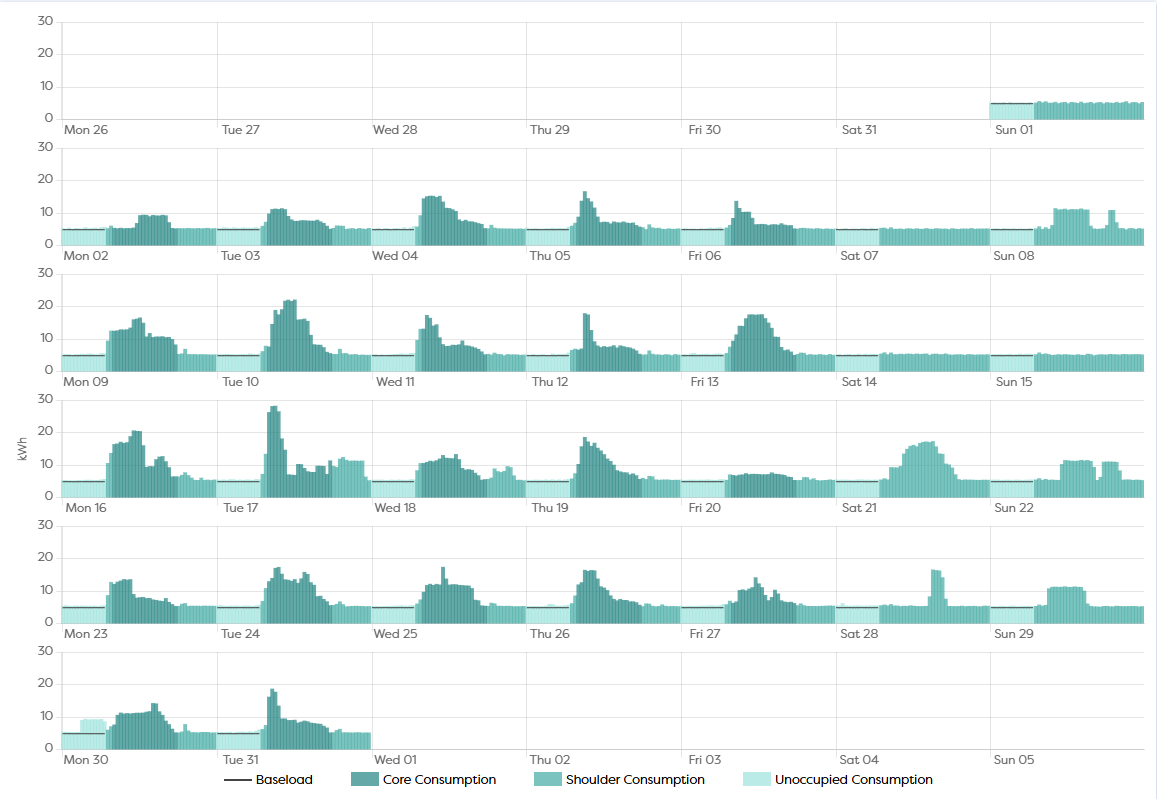
Your Half Hourly (HH) data shows unexpected energy spikes, leaving you uncertain whether you’re looking at waste or legitimate EV charging.
After
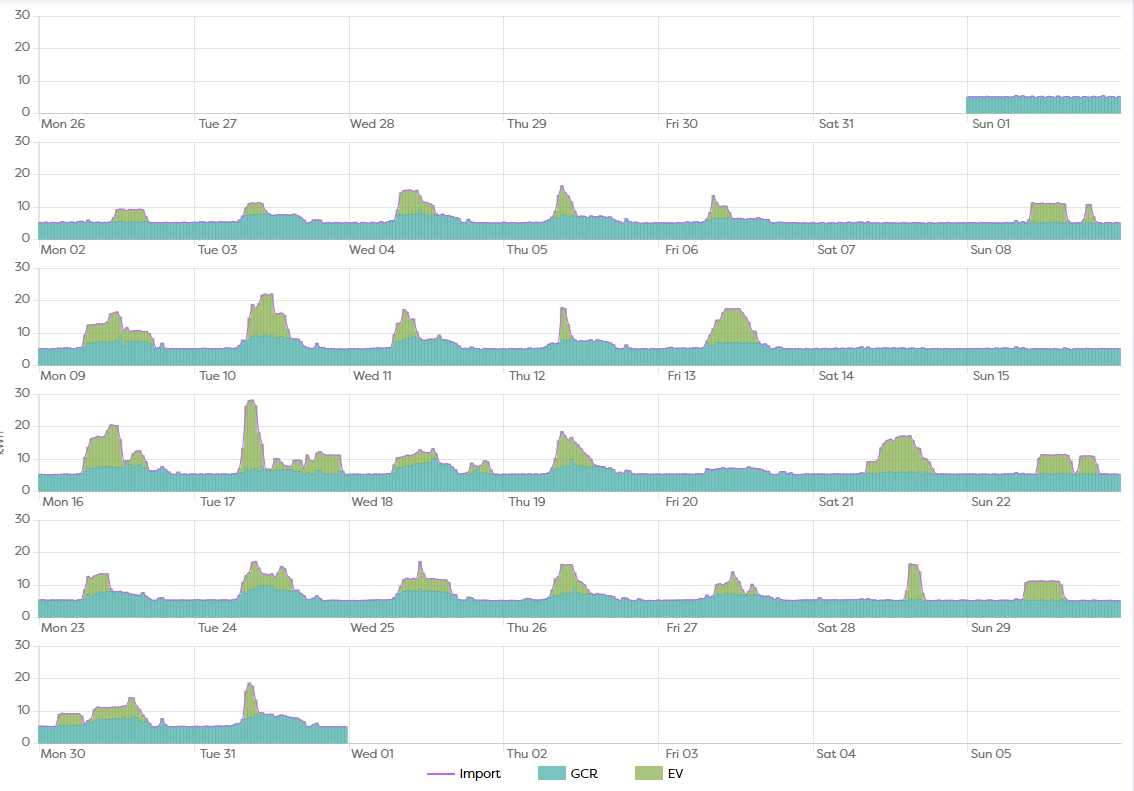
EV charging appears as a separate stream from building consumption, making your energy data clear and actionable. You can identify spikes and take action with confidence.
This visibility matters because EV chargers create new points of consumption across your estate.
Without proper monitoring, they interrupt your building energy data, making accurate energy management and procurement activity impossible.
What this looks like in practice
Consider a typical scenario: you’ve installed charging infrastructure across multiple sites with capacities ranging from 7.2kW to 40kW.
As fleet electrification accelerates, charging sessions increasingly obscure your building’s baseline consumption.
Data disaggregation restores visibility. You can:
- Monitor building usage independently to identify waste
- Track EV charging patterns separately for capacity planning
- Maintain accurate baselines as you implement efficiency measures
- Make informed decisions about load shifting and procurement
The integrated approach means you can see both your building and EV consumption from a single platform. Which is essential for estate-level oversight.
Maintaining control as you electrify
We know that many businesses now have targets they need to meet for electrifying their fleet.
Disaggregation ensures you retain clear visibility as you scale charging across your estate.
As the only Charge Point Operator, Data Collector and IDNO in the UK, we provide precise data separation that keeps your energy strategy on track.
With clear visibility of what comes from EVs and what represents general consumption, you can identify issues, optimise performance and sustain progress toward your energy and sustainability goals.
 Don’t miss out
 Don’t miss out
Stay in the loop with our news, events and more direct to your inbox

