Why electricity connection projects stall, and how to keep them moving
Electricity connection delays aren’t new. But they are becoming harder to manage.
In our recent webinars, one issue came up again and again: response times. After that, it was point of connection applications and communication.
These challenges aren’t new. However, they are becoming more visible as demand increases and timelines tighten.
As a result, more projects are falling behind before work has even started on site.
Why projects don’t move as expected
On paper, a connection project looks simple:
- You define what you need
- You apply for capacity
- Then design starts, followed by delivery
But in reality, it rarely works like that.
Different parties handle each stage. Each one has its own process and timeline.
As a result, delays are built into the system.
For example, if an application takes longer than expected, everything behind it moves. As a result, the wider project starts to slip.
Where electricity connection delays actually happen
From both live projects and webinar feedback, delays usually happen in three places:

Point of connection applications
Waiting for capacity confirmation

The gap between design and delivery
None of these are unusual. However, the problem is how they are managed.
When each stage is handled separately, progress slows down. Instead of one joined-up programme, projects rely on handovers.
That’s where time is lost.
Why electrification is making the problem worse
At the same time, demand is increasing.
As organisations move towards EV charging, heat pumps and electrification, they need more capacity.
Most sites were not designed for this. So, upgrades are now required.
This leads to:
- More applications
- More approvals
- More pressure on networks
As a result, electricity connection delays are becoming more frequent – and more disruptive to wider projects.
The real issue: disconnected delivery
The core issue isn’t just the DNO or response times.
It’s the way projects are managed.
Applications, design, and delivery are often treated as separate steps. However, they all depend on each other.
When they aren’t aligned, delays are almost guaranteed.
That’s why even small issues quickly turn into bigger problems.
How Stark keeps projects moving
At Stark, we don’t treat connections as separate stages.
Instead, we manage the whole process as one coordinated programme.
That means:
- One team managing applications and communication
- Design aligned with delivery from the start
- Work coordinated so there are no gaps between stages
We also manage both contestable and non-contestable work.
So, while the DNO still completes their required elements, we handle everything around them.
As a result, there is less waiting and fewer delays.
What this means for your project
This approach changes how projects move.
Instead of chasing updates from multiple parties, you get a clear plan from the start.
In practice, this means:
- Clear timelines you can work to
- Fewer delays between stages
- Less time spent chasing progress
- Better alignment with your wider project
So the outcome is the same, but the process is far more controlled.
Why more organisations are changing approach
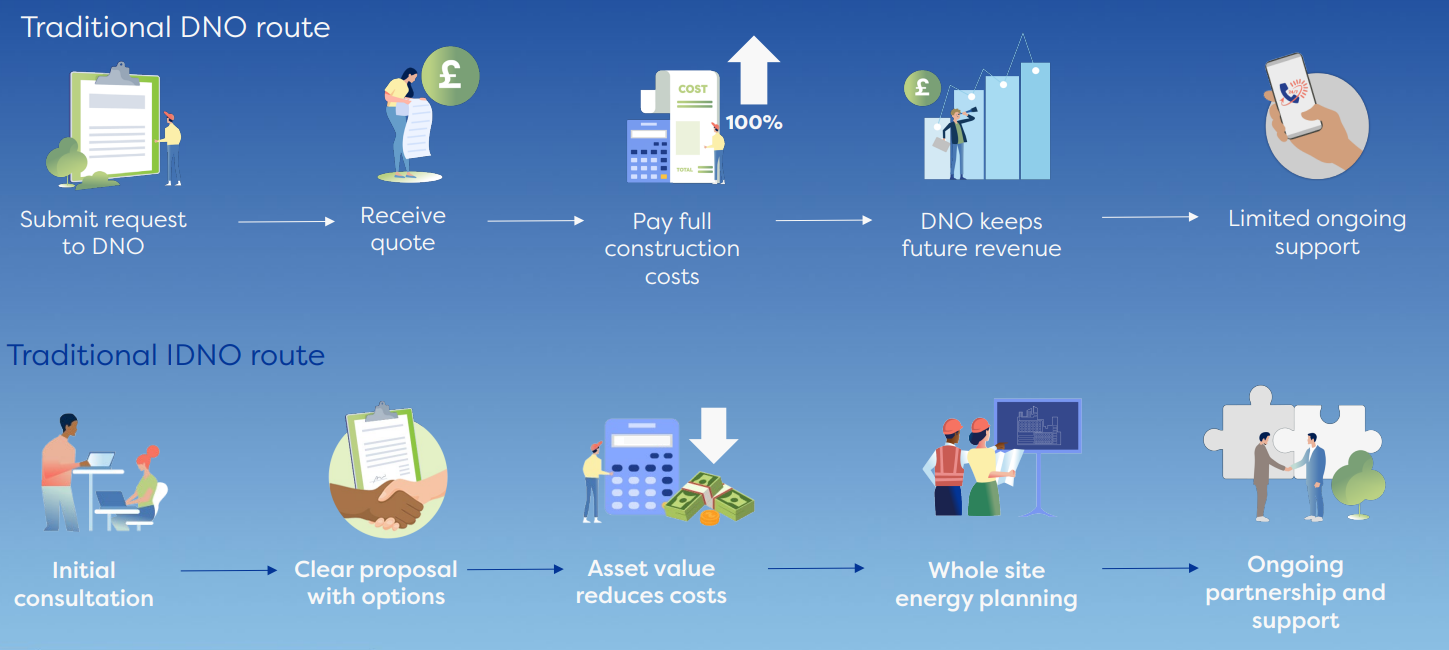
In our webinar poll, most organisations said they had never worked with an ICP or IDNO before.
That’s important. Because it shows many projects are still relying on the traditional route.
However, that route often leads to:
- Slow response times
- Limited visibility
- Disjointed delivery
By changing how the project is managed, these issues can be reduced significantly.
Electricity connection delays are predictable if you manage them properly
Delays don’t usually come from one major issue.
They come from small gaps between stages.
However, when you manage those stages as one process, projects become easier to control.
As a result, timelines become more predictable and easier to deliver against.
Want to avoid electricity connection delays on your next project?
 Don’t miss out
 Don’t miss out
Stay in the loop with our news, events and more direct to your inbox

