

What happens when Data and Metering don’t work together under MHHS
The success of Market-wide Half Hourly Settlement (MHHS) relies on accurate, complete and timely Half Hourly data.
If that data isn’t available, organisations risk increased estimation, greater operational disruption and reduced control over energy costs.
That’s why organisations can no longer think about data and metering separately.
Why data quality matters more under MHHS
For MHHS to work effectively, Suppliers need access to reliable consumption data.
When data is incomplete, delayed or inaccurate:
- suppliers estimate consumption;
- bills become less accurate; and
- costs become harder to manage.
Over time, this can lead to increased spend, more corrections and greater operational disruption.
Under MHHS, relying on estimated data is no longer sustainable.
Accurate, actual consumption data provides the foundation for better settlement, improved visibility and greater confidence in energy decisions.
The challenge of fragmented data
For many organisations, data is still fragmented across multiple providers and systems.
This can create:
- inconsistent insight across portfolios;
- delays in accessing complete information; and
- gaps in coverage, especially across mixed or legacy estates.
A fragmented data model leads to fragmented performance.
It also makes it harder to identify and resolve the root cause of issues, especially when data and metering are managed by different organisations.
Problems can be identified quickly but take much longer to fix when responsibility sits across multiple parties.
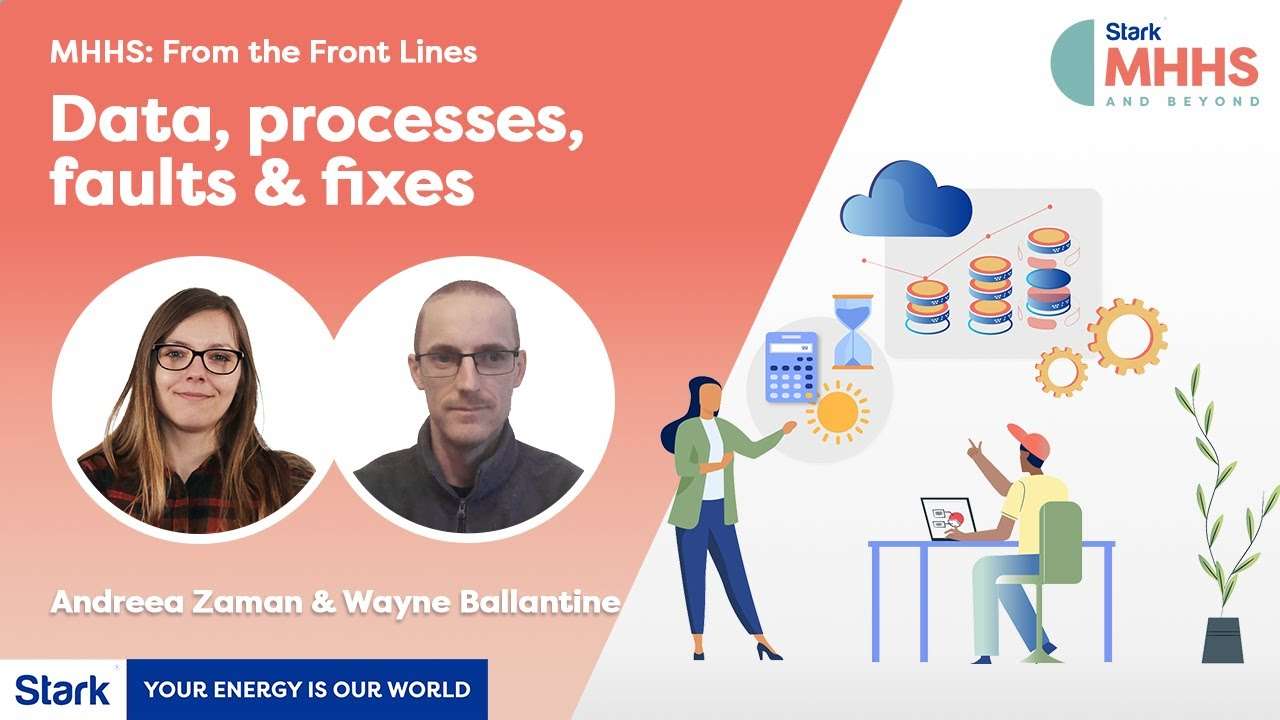
More data, much faster. How our operations team handle the changes
Our Multi-Utility Manager Andreea Zaman and Wayne Ballantine, our Operations Technical Team Leader, discuss how the migration of thousands of meters to Half Hourly settlement impacts our operations processes and systems.
Why Data and metering must work together
Energy data quality starts at the meter.
Missing reads, communication failures and meter faults don’t start in the data. They start with the infrastructure collecting it.
This is why integrating data and metering is critical.
When data and metering work together:
- issues are identified and resolved at source;
- data flows remain consistent and complete;
- performance is monitored continuously;
- visibility improves across the entire estate; and
- accountability is clear.
Without this integration, organisations are left reacting to symptoms rather than fixing root causes.
Even if your meters are tied into an existing metering contract, you can still improve data performance. In many cases, we can collect and optimise your data without changing your current metering arrangements.
The benefits of an integrated approach
An integrated approach to data and metering for MHHS removes the gap between identifying an issue and resolving it.
Instead of passing responsibility between multiple providers, organisations benefit from a single, coordinated approach that improves performance across the estate.
This helps to reduce reliance on estimated data, improve billing accuracy and strengthen settlement performance.
It also increases visibility across meter portfolios, enables faster issue resolution and reduces operational complexity.
Most importantly, it ensures that data supports decision-making rather than creating uncertainty.
“Stark has been a trusted partner throughout our work on MHHS readiness. Their proactive communication, clear guidance, and deep market expertise have given us confidence at every stage of the process. Their reliability and customer-first approach truly sets them apart.”
Supplier Manager, Zenergi
Where Stark makes the difference
We combine data and metering services into a single integrated delivery model.
By linking metering performance directly to data, we help organisations improve visibility, reduce risk and maintain control under MHHS.
Our approach delivers:
- high-performance Day + 1 Data across all meter types;
- complete estate coverage, including legacy and mixed infrastructure;
- integrated field and data services to resolve issues quickly; and
- one accountable partner across your metering and data estate.
Top tips to improve data readiness for MHHS
To strengthen data quality ahead of MHHS:
- Identify and address data gaps across your estate.
- Reduce reliance on estimated reads.
- Consolidate data sources to improve consistency.
- Ensure visibility across all meters and sites.
- Choose a provider that can access and support every meter type.
The earlier these challenges are addressed, the easier it becomes to reduce risk and improve performance before MHHS migration progresses further.
Experience data gaps or delays?
 Don’t miss out
 Don’t miss out
Stay in the loop with our news, events and more direct to your inbox

